

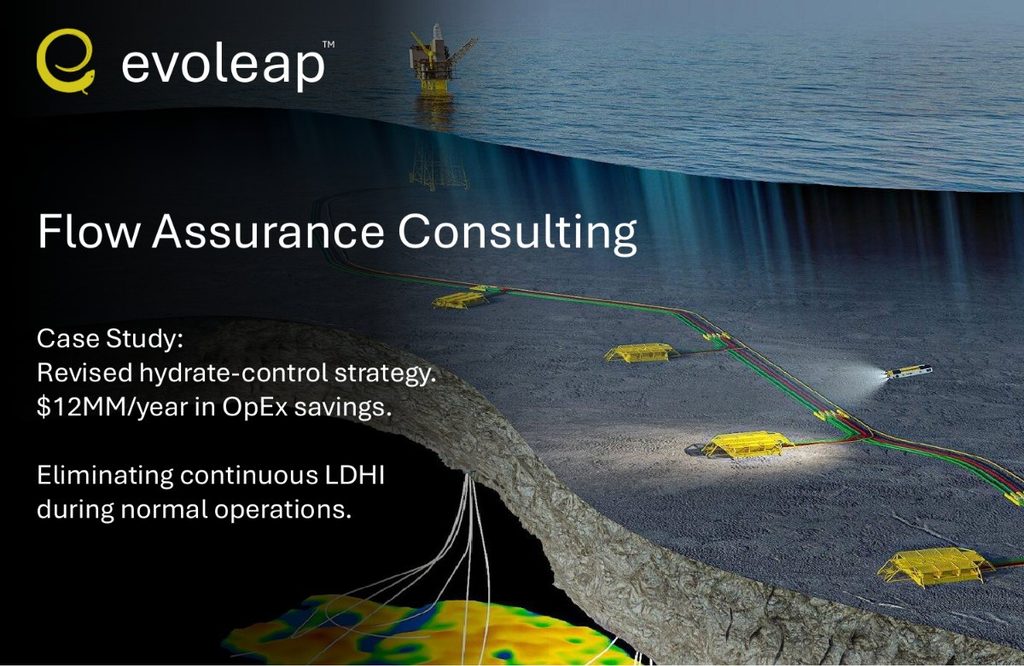
For a mature deepwater tieback, continuous LDHI (low-dosage hydrate inhibitor) injection had become a significant operating expense. The operator asked a simple question: was the treatment still needed under current production conditions?

This case study follows the engineering behind the answer. Produced-fluid testing, water analysis and hydrate modeling were compared with simulated normal-production conditions, and together they supported eliminating continuous LDHI injection during assessed normal production. Shutdown and cold restart were treated separately, with a revised operating procedure.
What you’ll learn about eliminating continuous LDHI
- How the team reassessed the treatment basis with produced-fluid testing, water analysis and hydrate modeling
- How engineers compared simulated normal-production conditions with the fluid-test evidence
- Why the normal-production result didn’t carry over to shutdown and cold restart
- What changed in the operating procedure, and the LDHI expense reduction the customer reported
The original hydrate strategy rested on conservative design-stage assumptions about fluids and operating conditions. Like many approved safeguards, it stayed in place because continuing it was the easiest decision. Tougher late-life economics changed that. With rising water cut and LDHI cost coupled to produced water, the operator asked evoleap to revisit the treatment basis.
In the end, the operating procedure decision came down to 3°F of subcooling: the fluids needed LDHI at 13°F, but not at 10°F. The full case study shows how the team built the evidence to reduce conservatism. It also dives into latent causes, explaining why safeguards like this one often follow a pattern of outlasting their original basis in operating assets.
The customer reported approximately $12 million per year less LDHI expense after the change, and more than a year of hydrate-free operation following the procedure revision.
evoleap’s flow assurance consulting team helps operators test whether long-standing treatment and operating assumptions still hold as fields mature. For more on hydrate risk, read Hydrate Formation Prediction & Operational Control Strategies.